


Walking into a doctor’s office and saying “my hair is thinning” often leads to a vague response — unless you know exactly which tests to ask for. Getting the right Tests for hair thinning is one of the most powerful steps you can take toward an accurate diagnosis, because so many causes of hair loss are detectable — and treatable — through a simple panel.
This guide walks through exactly which labs matter, what the results mean, and how to advocate for yourself if your doctor initially dismisses your concerns.
Key Takeaways
- The right Test for hair thinning can identify reversible causes like iron deficiency, thyroid dysfunction, and hormonal imbalance.
- Key tests include ferritin, TSH, free T3/T4, vitamin D, zinc, and androgen markers.
- Optimal ferritin for hair health is often higher than the “normal” lab range suggests.
- Results should always be interpreted alongside your symptoms and hair loss pattern, not in isolation.
- If your doctor won’t order a full panel, you can request specific tests by name or consult a dermatologist or trichologist.
Why Blood Work Matters for Hair Thinning
Hair follicles are metabolically demanding and highly sensitive to internal imbalances. Because hair isn’t essential for survival, your body deprioritizes it during nutrient deficiencies or hormonal stress — which is exactly why hair thinning is often one of the earliest visible signs of an underlying issue.
Requesting targeted blood work for hair thinning allows you and your doctor to distinguish between reversible causes (like low iron or thyroid dysfunction) and chronic causes (like genetic pattern hair loss), which require different treatment approaches entirely.
The Core Blood Panel for Hair Thinning
1. Ferritin (Iron Stores)
Ferritin is arguably the single most important — and most commonly overlooked — test for hair thinning in women. Unlike a standard iron test, ferritin measures your body’s stored iron reserves, which directly affect hair follicle function.
- Standard lab range: Often 10–150 ng/mL depending on the lab
- Optimal range for hair health: Many hair loss specialists recommend ferritin levels above 40–70 ng/mL, significantly higher than the low end of the “normal” range
2. Thyroid Panel
Since thyroid dysfunction is a well-documented cause of diffuse hair thinning, a complete thyroid panel should include:
- TSH (Thyroid-Stimulating Hormone): The primary screening test
- Free T3 and Free T4: Active thyroid hormone levels
- Thyroid antibodies (TPO, TgAb): Helps identify autoimmune thyroid conditions like Hashimoto’s, which can affect hair even when TSH appears “normal”
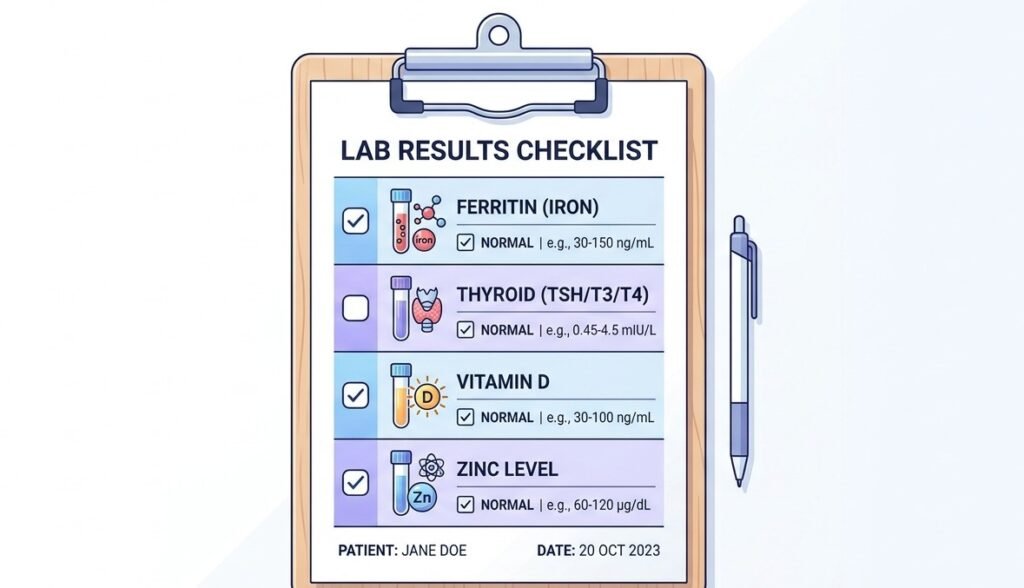
3. Vitamin D
Vitamin D receptors are present in hair follicles, and deficiency has been associated with several forms of hair loss, including telogen effluvium and alopecia areata.
- Deficient: Below 20 ng/mL
- Insufficient: 20–29 ng/mL
- Sufficient: 30–50 ng/mL (optimal range for most adults)
4. Zinc
Zinc plays a critical role in hair tissue growth and repair. Deficiency, though less common, can contribute to shedding and is worth ruling out, especially in those with restrictive diets or gastrointestinal absorption issues.
5. Androgen Panel (Testosterone, DHEA-S)
For women experiencing pattern-style thinning (crown or part-line concentrated) alongside symptoms like acne or irregular periods, an androgen panel helps identify potential PCOS or other androgen-related causes.
- Total and free testosterone
- DHEA-S (adrenal androgen marker)
- LH/FSH ratio, when PCOS is suspected
Additional Tests Worth Considering
Depending on your symptoms and history, your doctor may also recommend:
- Complete Blood Count (CBC): Screens for anemia and general health markers
- Fasting glucose and insulin: Useful if PCOS or insulin resistance is suspected
- Vitamin B12: Deficiency can contribute to fatigue and hair changes
- Antinuclear antibody (ANA) test: If an autoimmune condition is suspected based on other symptoms

How to Request the Right Blood Work for Hair Thinning
Many women report being told their hair loss is “just stress” or “normal aging” without any testing. If you’re advocating for a thorough evaluation, consider these steps:
1. Be Specific with Your Doctor
Rather than saying “my hair is thinning,” come prepared with:
- How long you’ve noticed thinning
- Whether it’s diffuse or pattern-specific
- Any accompanying symptoms (fatigue, cycle changes, skin changes)
2. Request Tests by Name
Politely and clearly ask for the specific panel: ferritin, TSH, Free T3/T4, vitamin D, zinc, and — if relevant — an androgen panel. This is far more effective than a general request.
3. Ask for a Copy of Your Results
Don’t just accept “everything looks normal.” Request the actual numbers, since standard reference ranges are often broader than the optimal ranges specifically associated with healthy hair growth.
4. Consider a Dermatologist or Trichologist
If your primary care provider is unable to order a full panel, a dermatologist or trichologist specializing in hair loss can often provide more targeted testing and interpretation.

Interpreting Your Results: Normal vs. Optimal
One of the most common frustrations women face is being told their labs are “normal” when their ferritin is at 15 ng/mL or their TSH is at the very top of the reference range. It’s important to understand that standard lab ranges are designed to capture disease, not necessarily optimal function.
For hair health specifically:
- Ferritin below 40 ng/mL is frequently associated with increased shedding, even if it falls within the “normal” range
- TSH above 2.5 mIU/L, while technically within range, has been associated with subclinical thyroid dysfunction in some studies
This is why interpreting your results in the context of your symptoms — not just the lab’s reference range — is essential.
Conclusion
Getting the right Test for hair thinning transforms hair loss from a confusing, frustrating mystery into an actionable, diagnosable condition. Ferritin, thyroid function, vitamin D, zinc, and androgen levels form the foundation of a thorough workup, and understanding optimal — not just “normal” — ranges empowers you to advocate for appropriate treatment. If your hair thinning persists despite normal-looking labs, don’t hesitate to seek a second opinion or a specialist who can dig deeper.
Frequently Asked Questions
Q: What is the most important blood test for hair loss? A: Ferritin is often considered the single most important test, as low iron stores are one of the most common and easily correctable causes of hair thinning in women.
Q: Can hair loss blood work come back normal even if hormones are the cause? A: Yes. Standard reference ranges are broad, and levels considered “normal” may still be suboptimal for hair health — which is why interpreting results alongside symptoms matters.
Q: How often should I get blood work done for ongoing hair thinning? A: If you’re actively treating an identified deficiency or imbalance, retesting every 3 to 6 months is common to track progress and adjust treatment.
Q: Do I need a doctor’s referral to get blood work for hair loss? A: In many regions, you can request these tests directly from a primary care physician, dermatologist, or through direct-to-consumer lab testing services, though results are best interpreted with a healthcare provider.
Q: What ferritin level is considered too low for healthy hair growth? A: While standard labs may list “normal” starting around 10–15 ng/mL, many hair loss specialists recommend levels above 40–70 ng/mL for optimal hair growth support.

1 thought on “Essential Blood Work 101: Tests for Hair Thinning”