


Handfuls of hair in the shower drain a few months after giving birth — or after a particularly brutal stretch of stress — can feel alarming. But postpartum & stress hair loss is one of the most common, well-understood, and temporary forms of hair shedding a woman can experience.
Medically known as telogen effluvium, this condition is your body’s natural response to a major physical or emotional shock. The good news: in the vast majority of cases, it resolves completely on its own. This guide explains exactly why it happens, how long it lasts, and what you can do to support your hair through the recovery process.
Key Takeaways
- Postpartum & stress hair loss is medically called telogen effluvium — a temporary, diffuse shedding condition.
- Shedding typically begins 2–4 months after childbirth or a stressful event, not immediately.
- The condition is self-resolving, usually improving within 6–12 months without permanent damage.
- Nutritional support, gentle hair care, and stress management can help the recovery process.
- If shedding persists beyond a year or shows a distinct pattern, it’s worth ruling out other causes like female pattern hair loss.
What Is Telogen Effluvium?
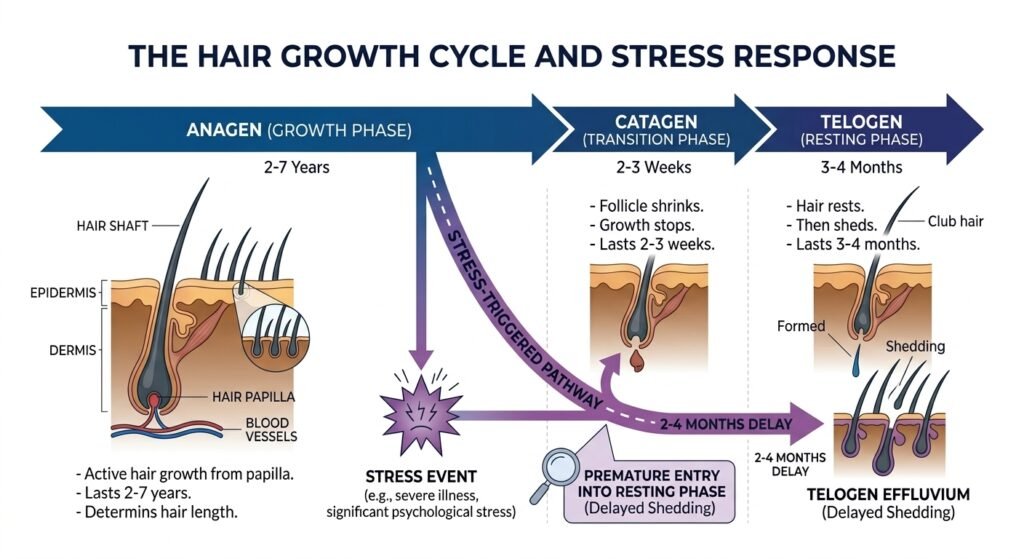
To understand postpartum & stress hair loss, it helps to understand the hair growth cycle. Hair follicles cycle through three phases:
- Anagen (growth phase): Hair actively grows for 2–7 years.
- Catagen (transition phase): A short 2–3 week transitional stage.
- Telogen (resting phase): Hair rests for about 2–3 months before naturally shedding.
Normally, only about 10-15% of your hair is in the telogen phase at any given time. During a significant physical or emotional stressor, a disproportionately large number of follicles are prematurely pushed into the telogen phase simultaneously. A few months later, all of that hair sheds at once — resulting in the sudden, dramatic thinning associated with telogen effluvium.
Why Postpartum & Stress Hair Loss Happens
During pregnancy, elevated estrogen levels extend the anagen (growth) phase, which is why many women notice thicker, fuller hair while pregnant. After childbirth, estrogen levels drop sharply, causing a large percentage of those extended-growth-phase hairs to shift into the telogen (resting) phase all at once.
Postpartum Hair Loss Timeline
- Weeks 1–8 after birth: Hair often still looks thick due to lingering pregnancy hormones
- Months 2–4 postpartum: Noticeable shedding typically begins
- Months 4–6 postpartum: Shedding is often at its peak
- Months 6–12 postpartum: Hair gradually returns to its pre-pregnancy density
Why Stress Triggers Hair Loss
Beyond childbirth, telogen effluvium can be triggered by a wide range of physical or emotional stressors. Understanding your own trigger can help you anticipate the shedding timeline and avoid unnecessary panic.
Common Stress-Related Triggers
- Major surgery or hospitalization
- High fever or severe infection
- Significant emotional trauma or grief
- Extreme or rapid weight loss
- Crash dieting or severe caloric restriction
- Starting, stopping, or switching certain medications
- Chronic, prolonged psychological stress
In each case, the shedding typically appears 2 to 4 months after the triggering event — which is often why people struggle to connect the dots between the stressor and the hair loss they’re experiencing months later.

How Long Does Postpartum & Stress Hair Loss Last?
For most women, telogen effluvium is self-limiting, meaning it resolves without treatment once the underlying trigger is removed or resolved. Typical recovery timelines include:
- Postpartum shedding: Usually resolves by 12 months after delivery
- Acute stress-related shedding: Often resolves within 6 months of the stressor ending
- Chronic telogen effluvium: If the stressor is ongoing (e.g., chronic illness or prolonged stress), shedding may persist longer than 6 months and requires addressing the root cause
If shedding continues well beyond a year, or if you notice a specific thinning pattern (such as a widening part or crown thinning) rather than diffuse shedding, it’s worth exploring to rule out a separate, chronic cause.
Supporting Hair Recovery: What Actually Helps
While telogen effluvium typically resolves on its own, certain habits can support healthier regrowth and minimize additional stress on the hair.
1. Prioritize Nutritional Support
- Ensure adequate iron, zinc, and vitamin D intake, especially postpartum when nutrient stores are often depleted
- Adequate protein intake supports keratin production, essential for hair structure
2. Practice Gentle Hair Care
- Avoid tight hairstyles that add tension to already-stressed follicles
- Use a wide-tooth comb and detangle gently, starting from the ends
- Minimize heat styling during peak shedding months
3. Manage Stress Where Possible
- Prioritize sleep, even in short stretches, especially postpartum
- Consider low-impact stress management techniques like walking or breathing exercises
- Seek support — postpartum recovery is physically and emotionally demanding, and reducing overall stress load can help regulate the hair cycle

When to See a Doctor
While most cases of postpartum and stress hair loss resolve naturally, consult a dermatologist if you notice:
- Shedding that continues beyond 12 months without improvement
- A distinct thinning pattern (crown or part-line thinning) rather than diffuse shedding
- Accompanying symptoms like fatigue, weight changes, or irregular periods, which may point to a thyroid or hormonal issue
- Patchy, non-diffuse hair loss, which may indicate a separate condition like alopecia areata
Conclusion
Postpartum and stress hair loss can feel overwhelming in the moment, but understanding the biology behind telogen effluvium offers real reassurance: this is a temporary, well-documented response to your body’s biggest challenges, not a sign of permanent damage. With patience, gentle hair care, and attention to nutrition and stress management, most women see their hair fully recover within 6 to 12 months. If shedding persists well beyond that window, a simple evaluation can help identify whether something else deserves attention.
Frequently Asked Questions
Q: How long after having a baby does postpartum hair loss start? A: Postpartum hair loss typically begins around 2 to 4 months after delivery, once elevated pregnancy hormones drop and follicles shift into the shedding phase.
Q: Will my hair go back to normal after postpartum shedding? A: In most cases, yes. Hair density typically returns to pre-pregnancy levels by 6 to 12 months postpartum as the hair growth cycle stabilizes.
Q: Can stress alone cause noticeable hair loss? A: Yes. Significant physical or emotional stress can trigger telogen effluvium, with shedding typically appearing 2 to 4 months after the stressful event.
Q: Is postpartum hair loss the same as female pattern hair loss? A: No. Postpartum hair loss is temporary and diffuse, while female pattern hair loss is a chronic, progressive condition with a distinct thinning pattern at the crown and part line.
Q: What vitamins help with stress-related hair shedding? A: Iron, zinc, vitamin D, and adequate protein intake are commonly recommended to support healthy regrowth, though it’s best to confirm specific deficiencies with a blood test before supplementing.
