

You’ve had your labs checked, you’ve been told your iron is “normal,” and yet your hair keeps thinning. This frustrating scenario is incredibly common, and it usually comes down to one overlooked detail: iron deficiency and ferritin behind female hair loss are connected in ways that standard lab ranges often fail to capture.
Ferritin — your body’s stored iron reserve — plays a far more significant role in hair growth than most people realize, and many women are walking around with ferritin levels technically “in range” but still too low to support healthy hair follicles. This article breaks down exactly how iron deficiency drives hair loss, what your ferritin levels should actually be, and how to correct it safely.
Key Takeaways
- Iron deficiency and ferritin hair loss are strongly linked because hair follicles are highly sensitive to low iron stores, even before anemia develops.
- Standard “normal” ferritin ranges are often too low to support optimal hair growth.
- Many hair specialists recommend a ferritin level above 40–70 ng/mL, not just above the lab’s minimum cutoff.
- Correcting iron deficiency can take 3–6 months to show visible improvement in hair density.
- Iron supplementation should always be guided by blood work, since excess iron can also be harmful.
Why Iron Matters So Much for Hair Growth
Hair follicles are among the most metabolically active tissues in the body, requiring a steady, well-oxygenated blood supply to function properly. Iron plays a central role in this process by supporting hemoglobin production, which carries oxygen to hair follicles and fuels the rapid cell division needed for hair growth.
When iron stores drop, your body prioritizes essential functions — like oxygen delivery to vital organs — over non-essential ones like hair growth. This is why hair thinning is often one of the earliest, most visible signs of iron deficiency, sometimes appearing before other classic symptoms like fatigue or paleness.
Ferritin vs. Iron: What’s the Difference?
Many women are confused about why their “iron” came back normal but their hair loss continued — often because the test that matters most, ferritin, wasn’t included.
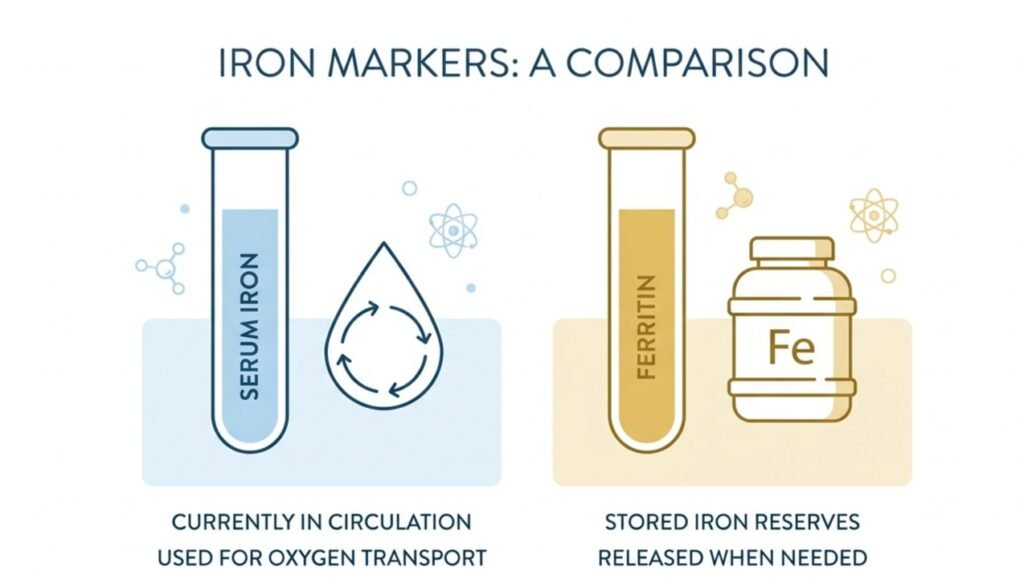
- Serum iron measures the iron currently circulating in your bloodstream, which fluctuates daily based on diet and time of day.
- Ferritin measures your body’s stored iron reserves, offering a much more accurate, stable picture of your long-term iron status.
A woman can have normal serum iron while still having critically low ferritin, which is precisely why ferritin — not a basic iron panel — is the test to specifically request when investigating hair thinning.
What Ferritin Level Is Considered Too Low for Hair Growth?
This is where the disconnect between standard lab ranges and hair-specific research becomes critical.
| Ferritin Level | Standard Lab Interpretation | Hair Health Interpretation |
|---|---|---|
| Below 15 ng/mL | Iron deficient | Significantly associated with hair shedding |
| 15–30 ng/mL | “Normal” (low end) | Often still associated with thinning in many women |
| 30–40 ng/mL | “Normal” | Borderline; may not support optimal regrowth |
| 40–70 ng/mL | “Normal” | Frequently cited as the optimal range for hair health |
| 70+ ng/mL | “Normal” to high-normal | Generally supportive of healthy hair growth |
Because standard labs are designed to flag disease (like clinical anemia) rather than optimize hair growth specifically, many women are told their ferritin is “fine” at levels of 12–20 ng/mL — numbers that hair loss specialists frequently associate with increased shedding.
Signs Your Hair Loss May Be Iron-Related
Hair-Specific Signs
- Diffuse thinning across the scalp, rather than a specific pattern
- Increased shedding noticeable in the shower or on your pillow
- Slower-than-usual hair regrowth after cuts or trims
Accompanying Systemic Signs
- Fatigue or low energy, even after adequate sleep
- Pale skin or pale inner eyelids
- Brittle nails or spoon-shaped nails (koilonychia)
- Restless leg symptoms, particularly at night
- Shortness of breath during normal activity
If you’re experiencing diffuse hair thinning alongside several of these symptoms, requesting a ferritin test is a reasonable and important next step.
Who Is Most at Risk of Iron Deficiency Hair Loss?
Certain groups of women face a significantly higher risk of low ferritin and related hair thinning:
- Menstruating women, particularly those with heavy periods (menorrhagia)
- Postpartum women, due to blood loss during delivery
- Vegetarians and vegans, since plant-based iron (non-heme iron) is less bioavailable than iron from animal sources
- Women with gastrointestinal conditions (like celiac disease or IBD) that impair iron absorption
- Frequent blood donors
- Endurance athletes, due to increased iron turnover and loss through sweat
How to Correct Iron Deficiency and Support Hair Regrowth
1. Confirm the Deficiency with Blood Work
Never begin iron supplementation based on symptoms alone. Excess iron can be toxic and is particularly dangerous for individuals with hemochromatosis or other iron-overload conditions, so testing first is essential.
2. Dietary Iron Sources
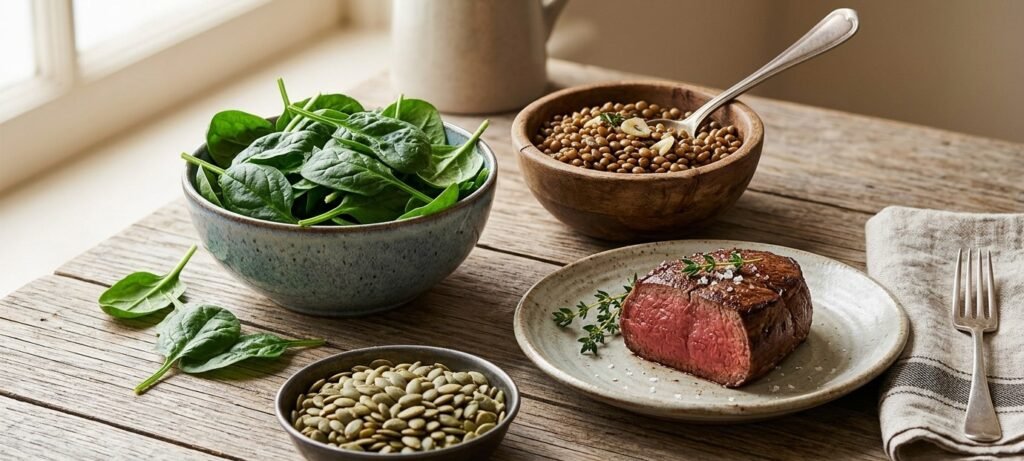
- Heme iron (highly absorbable): Red meat, poultry, fish
- Non-heme iron (less absorbable): Lentils, spinach, tofu, fortified cereals
- Pairing non-heme iron sources with vitamin C (like citrus or bell peppers) significantly improves absorption
3. Iron Supplementation
When dietary changes aren’t enough, your doctor may recommend an iron supplement. Common considerations include:
- Ferrous sulfate, ferrous bisglycinate, or other forms, depending on tolerance
- Taking iron with vitamin C to enhance absorption
- Avoiding calcium-rich foods or coffee/tea close to supplement timing, as these can inhibit absorption
4. Address the Underlying Cause
If heavy menstrual bleeding or a GI absorption issue is driving the deficiency, treating that root cause is essential for long-term correction — supplementation alone may only provide temporary improvement.

How Long Does It Take to See Hair Regrowth After Correcting Ferritin?
Patience is essential when addressing iron deficiency and ferritin hair loss, since hair growth operates on a delayed cycle. Most women can expect:
- 1–3 months: Ferritin levels begin rising with consistent supplementation or dietary changes
- 3–6 months: Reduced shedding becomes noticeable
- 6–12 months: Visible improvement in hair density and thickness, as new, healthier hair replaces shed strands
Because hair follicles operate on a delayed growth cycle, it’s common for shedding to continue for a period even after ferritin levels normalize — this is expected and not a sign that treatment isn’t working.
Conclusion
The relationship between iron deficiency and ferritin behind female hair loss is one of the most overlooked, yet most correctable, causes of female hair thinning. Because standard lab ranges often fail to reflect what’s truly optimal for hair health, many women are left without answers despite “normal” results. By requesting a specific ferritin test, understanding the optimal range, and addressing deficiency safely under medical guidance, you can address one of the most common silent triggers behind hair loss — and give your hair the foundation it needs to recover.
Frequently Asked Questions
Q: What ferritin level causes hair loss in women? A: While standard labs may flag deficiency only below 10–15 ng/mL, many hair specialists associate ferritin levels below 40 ng/mL with increased shedding and thinning.
Q: Can low ferritin cause hair loss without anemia? A: Yes. Hair follicles can be affected by low iron stores even before full-blown anemia develops, which is why ferritin should be tested specifically, not just a standard iron panel.
Q: How long does it take for hair to grow back after fixing iron deficiency? A: Most women notice reduced shedding within 3 to 6 months of correcting ferritin levels, with more visible density improvements over 6 to 12 months.
Q: Should I take iron supplements if I have hair loss? A: Only after confirming deficiency through blood work. Taking iron supplements without a confirmed deficiency can lead to iron overload, which carries its own health risks.
Q: What foods increase ferritin levels naturally? A: Iron-rich foods like red meat, lentils, spinach, and fortified cereals — especially when paired with vitamin C sources — can help support healthy ferritin levels over time.
