


If your hair has been thinning and nothing seems to explain why, your hormones may hold the answer. The connection between hormonal hair thinning is one of the most under-discussed — yet most common — causes of female hair loss, often overlapping with thyroid disorders, PCOS, and menopause.
Unlike genetic hair loss, hormonal hair thinning is frequently reversible once the underlying imbalance is identified and treated. This article breaks down exactly how each hormonal condition affects your hair, what symptoms to watch for, and how to get an accurate diagnosis.
Key Takeaways
- Thyroid imbalances (both hypo- and hyperthyroidism) disrupt the hair growth cycle, often causing diffuse thinning.
- PCOS raises androgen levels, which can trigger pattern-style thinning at the crown and part line.
- Menopause lowers estrogen and progesterone, unmasking androgen sensitivity and accelerating shedding.
- Hormonal hair thinning is often treatable and partially reversible once the root cause is addressed.
- A simple blood panel can identify most hormone-related causes of hair loss.
How Hormones Control Your Hair Growth Cycle
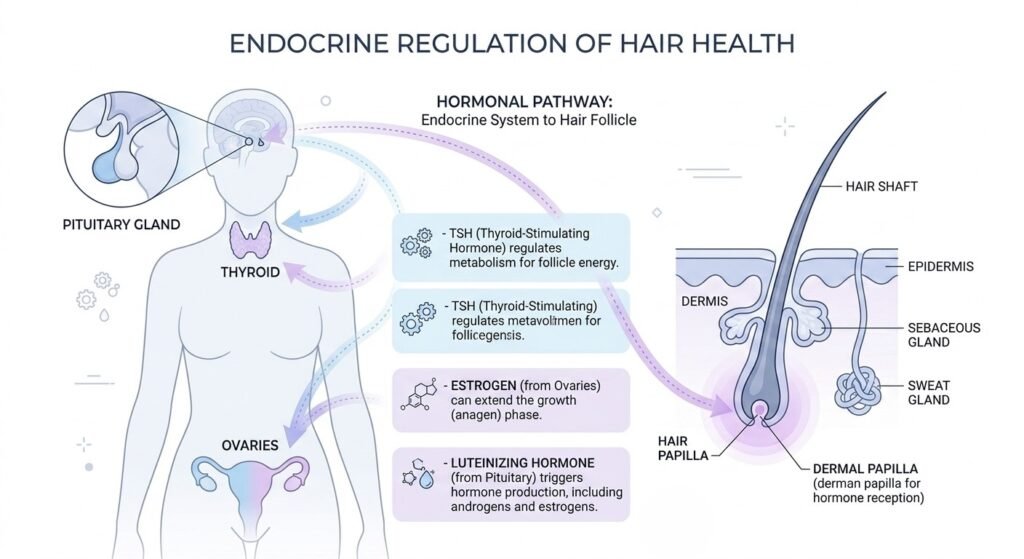
Hair growth is regulated by a delicate balance of hormones, including estrogen, progesterone, thyroid hormones, and androgens (like testosterone and DHT). When these hormones shift — due to a medical condition, life stage, or imbalance — hair follicles can prematurely enter the resting (telogen) phase or shrink over time (miniaturization), leading to visible thinning.
This is why hair changes are often one of the earliest visible signs of an internal hormonal shift, sometimes appearing before other symptoms are even noticed.
Thyroid Disorders and Hair Thinning
The thyroid gland regulates metabolism, and both an underactive thyroid (hypothyroidism) and an overactive thyroid (hyperthyroidism) can significantly impact hair health.
Signs Your Hair Thinning May Be Thyroid-Related
- Diffuse thinning across the entire scalp (not just the crown)
- Dry, brittle, or coarse-feeling hair strands
- Thinning eyebrows, especially the outer third
- Accompanying fatigue, weight changes, or temperature sensitivity
Hypothyroidism slows the hair growth cycle, pushing more follicles into the resting phase simultaneously, which results in noticeable diffuse shedding roughly 2–4 months after the thyroid imbalance begins.
PCOS (Polycystic Ovary Syndrome) and Hair Loss
PCOS is a hormonal condition that causes elevated androgen levels, which can lead to a pattern of hair thinning very similar to female pattern hair loss.
How PCOS Affects Hair
- Increased androgens can shrink hair follicles over time (miniaturization)
- Thinning typically concentrates at the crown and front hairline
- Often accompanied by other androgen-related symptoms: acne, irregular periods, and excess facial/body hair
Managing PCOS-Related Hair Thinning
- Anti-androgen medications (under medical supervision)
- Insulin-sensitizing treatments, since insulin resistance often drives PCOS-related hormone imbalances
- Topical treatments like minoxidil to support regrowth alongside hormonal management
Menopause and Hormonal Hair Thinning
During perimenopause and menopause, estrogen and progesterone levels decline significantly. Since these hormones typically help counterbalance androgens, their drop can “unmask” androgen sensitivity in hair follicles — leading to thinning that resembles female pattern hair loss.
Common Menopausal Hair Changes
- Gradual thinning at the crown and widening part
- Slower regrowth after normal shedding
- Increased hair fragility and reduced shine
- Sometimes accompanied by increased facial hair growth due to relative androgen dominance
This is why many women notice hair thinning accelerating specifically during the perimenopausal transition, even if their hair was previously healthy and thick.
Diagnosing Hormonal Hair Loss: What Tests to Ask For
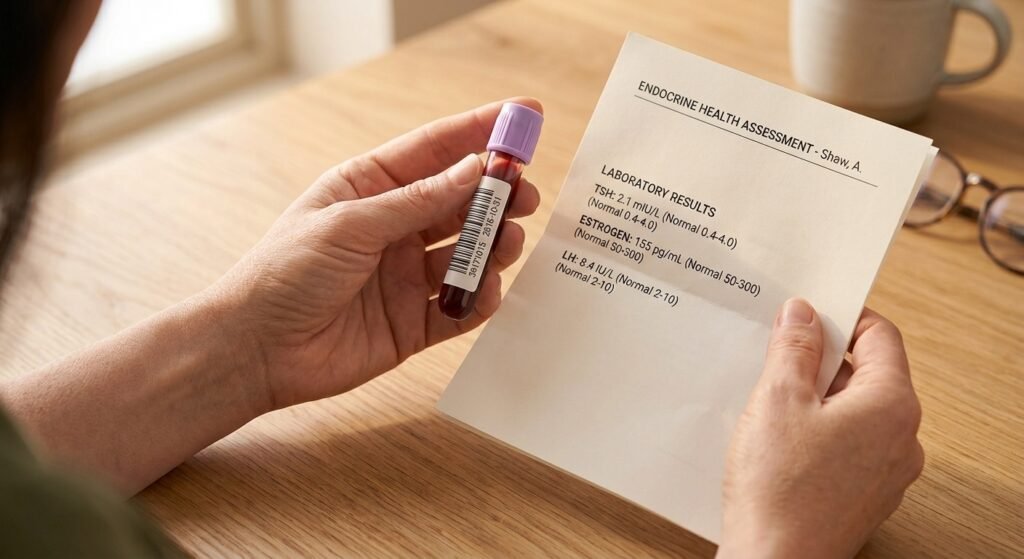
Since hormonal hair thinning are so closely connected, a proper diagnosis usually starts with bloodwork. Commonly recommended tests include:
1. Thyroid Panel
- TSH (Thyroid-Stimulating Hormone)
- Free T3 and Free T4
- Thyroid antibodies (if autoimmune thyroid disease is suspected)
2. Androgen and PCOS Markers
- Total and free testosterone
- DHEA-S
- LH/FSH ratio (often elevated in PCOS)
3. Menopause-Related Hormones
- Estradiol
- FSH (elevated levels can indicate perimenopause/menopause)
4. Supporting Nutritional Markers
- Ferritin (iron stores)
- Vitamin D
- Zinc

Can Hormonal Hair Thinning Be Reversed?
In many cases, yes — particularly when the underlying cause is addressed early. Thyroid-related hair loss often improves significantly within 6–12 months of proper thyroid hormone regulation. PCOS-related thinning can stabilize and partially regrow with consistent androgen management. Menopausal thinning is typically more gradual to treat but responds well to a combination of topical treatments and, in some cases, hormone therapy discussed with a physician.
The key factor across all three conditions is early intervention — the longer hormonal imbalances go untreated, the more follicle miniaturization can progress, making regrowth more difficult.
When to See a Doctor
Book an appointment with an endocrinologist, gynecologist, or dermatologist if you notice:
- Hormonal Hair thinning alongside irregular periods, acne, or excess facial hair (possible PCOS)
- Thinning paired with fatigue, weight changes, or cold intolerance (possible thyroid issue)
- Hair changes coinciding with perimenopausal symptoms like hot flashes or irregular cycles
Conclusion
The link between hormonal hair thinning is powerful, but it’s also one of the most manageable causes of hair loss once properly diagnosed. Whether it’s your thyroid, PCOS, or the hormonal shifts of menopause, identifying the specific imbalance driving your hair thinning is the critical first step toward effective treatment and regrowth. Don’t dismiss hair changes as purely cosmetic — they’re often your body’s way of signaling a deeper hormonal shift worth investigating.
Frequently Asked Questions
Q: Can hormonal hair loss grow back? A: Yes, in many cases. Once the underlying hormonal imbalance (thyroid, PCOS, or menopause-related) is properly treated, hair often regrows over 6–12 months, though results vary by individual.
Q: How do I know if my hair loss is hormonal or genetic? A: Hormonal hair loss often comes with additional symptoms (fatigue, irregular periods, acne, temperature sensitivity) and may fluctuate with treatment, while genetic hair loss (FPHL) is typically more gradual and pattern-based without other systemic symptoms.
Q: Does menopause cause permanent hair loss? A: Not necessarily. While menopausal hair thinning can persist without treatment, it often responds well to topical treatments, hormone therapy, or a combination approach discussed with your doctor.
Q: What blood tests should I ask for if I suspect hormonal hair loss? A: A thyroid panel (TSH, Free T3, Free T4), androgen markers (testosterone, DHEA-S), and ferritin are a good starting point for most women experiencing unexplained hair thinning.
Q: Can birth control help with PCOS-related hair thinning? A: In some cases, yes — certain birth control pills can help regulate androgen levels, but treatment should always be personalized with a doctor familiar with your full hormonal profile.

1 thought on “Hormonal Hair Thinning: Thyroid, PCOS & Menopause”